
AI Companion Robot for Adults: What Actually Works
AI Companion Robot for Adults: The Real Price Table
A companion robot with servos and silicone skin runs anywhere from a few thousand dollars to well past ten grand — and most still ship with a waitlist instead of a delivery date. Here's what already talks back, remembers you, and shows up on your phone tonight.
The deal-breaker isn't the sticker price. It's that the sticker buys a shell. The part you'd actually talk to — the voice, the memory, the personality — is software, and you'll likely pay for it separately, on a subscription, once the box finally arrives. So I put the shell and the software side by side.
| Row | Physical Companion Robot | GoLove.ai |
|---|---|---|
| Upfront cost | Thousands, often financed | Free to start |
| Ongoing cost | AI subscription + maintenance, varies by maker | PRO about $19.99/mo, ~$9.99/mo annual |
| Wait time | Preorder / waitlist, rarely a firm date | Same minute |
| Voice | Depends on onboard hardware | Live voice calls + voice messages |
| Photos / video | A fixed face | Photos on request, video from a photo |
| Memory | Limited by onboard processing | Remembers chat history |
My pick for anyone weighing this today is GoLove.ai, for one blunt reason: every row a lonely adult actually cares about is software, and GoLove delivers all of them now rather than after a deposit and a wait. The realistic roster is live right this second — no signup wall, no financing form, nothing between you and the first message.
Takeaway: buy the conversation first; the shell can wait.
Prices checked 2026-09; promos vary by region.
HEAR HER SAY IT
Real-time voice calls and voice notes.

Physical Companion Robots: The Honest Pros and Cons
I'm not going to pretend a physical robot is pointless. The deal-breaker for most buyers is cost-per-wow, not the concept.
What a robot genuinely gets right
- Presence. Something sitting in the room beats something in your pocket for a certain kind of loneliness. That's real, and no app fully closes that gap.
- Tactile realism. Skin materials have gotten good. If touch is the whole point, software can't compete.
- Novelty. Guests notice. You notice. For a few weeks, it's a story.
What a robot gets wrong
- Cost stacks. Hardware, then financing, then the AI subscription most makers charge on top. The listicles never add those up (I did, above — it isn't pretty).
- Mobility is mostly a face. Head turns, eye tracking, lip sync. Walking, hugging, reaching for you — not what ships.
- Onboard AI has a ceiling. A brain that has to fit inside a head means a shallower personality and shorter memory than a cloud-backed app.
- Maintenance and shipping. Parts wear, updates lag, and preorders slip.
A robot is a genuinely good sculpture with a lukewarm brain. Takeaway: the shell is impressive, but the brain is where you'll spend your evenings — and that's the part to shop for.
Voice and Memory: The Row That Actually Matters
Strip away the silicone and this is the row buyers are really chasing: a voice that picks up, and a partner who remembers what you said yesterday.
Starting a Call in Seconds
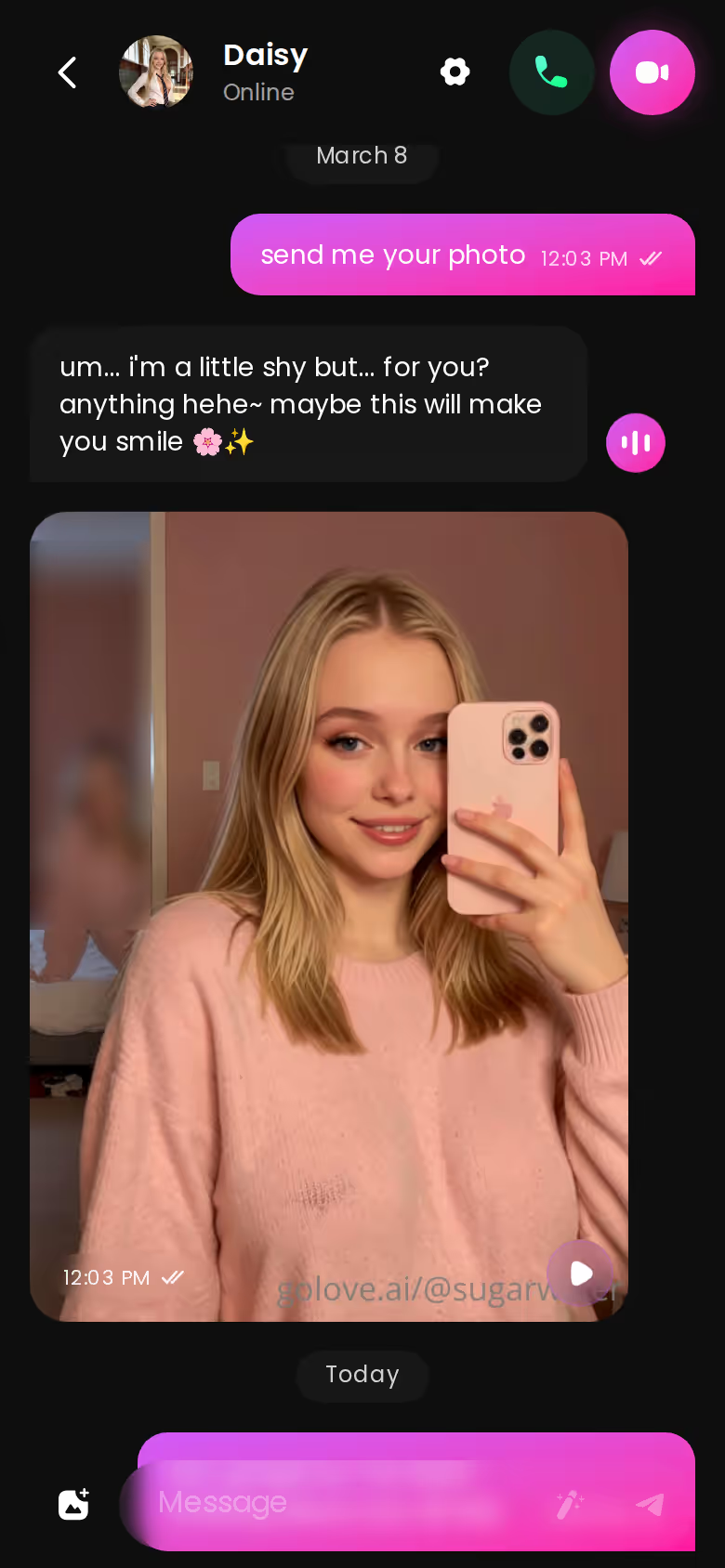
GoLove's Explore page is instant chat entry — open a character and start talking, no account first. From the thread you can send voice messages or start a live, real-time voice call with the same character. Chat Settings sit right there too: a voice picker, a lust level slider from 1 (sweet) to 5 (unfiltered), and a response length slider from short to rich. A robot needs a firmware update to change its voice. Here it's a dropdown.
What GoLove Remembers Between Chats
Memory is a core feature, not a paid trick: the character carries your chat history forward, and Relationship Progression builds on it. Say you tell Avery on Tuesday that you've been dreading a job interview. Thursday, you come back, and the message you want waiting is "so — how did it go?" That's the continuity a robot's onboard chip struggles to hold, because it has to store and retrieve everything locally.
I won't put a number on how far back recall stretches. The docs say it remembers history, and that's what I'm citing.
Takeaway: voice plus memory is the product. GoLove sells exactly that, tonight.
The Body a Robot Promises, Delivered as a Photo
The robot's pitch is a body you can look at. The uncomfortable truth is that most companion apps counter with one static profile picture — the same face, forever. That's the "before," and it's an instant skip for anyone comparing against physical presence.
Characters you can open right now
Tap any of them and the chat starts there






Requesting a Photo Mid-Chat
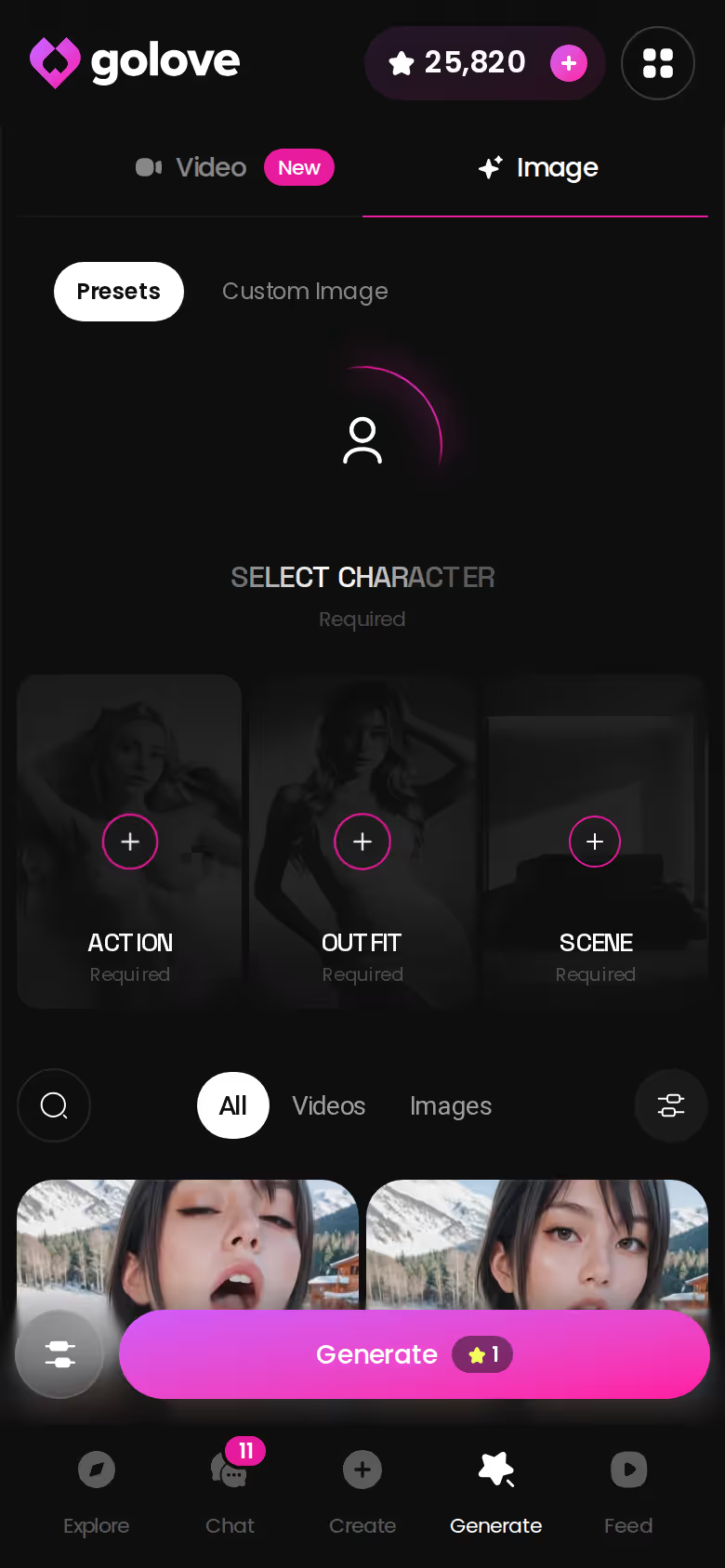
The "after" is GoLove's Request Photos in Chat. You're mid-conversation, you ask, and she sends a new image of herself in the moment — not a stock avatar. Behind it sits the Generate tab: 35 realistic picture poses across casual, suggestive, body-focus and explicit, 21 outfits, 34 backgrounds, batches of 2, 4 or 8. The character's Gallery keeps everything by date.
Video Generation Works With Her
Generate Video from Photo lives in the chat too. Pick a still she just sent, tap, and it moves. Photo first, motion second — that's the order that matters for most people, and it's how GoLove is built.
Takeaway: a robot has one face; GoLove's characters have as many as you ask for.
The Feed and Video Generator: A Body That Updates Itself
The deal-breaker with robot bodies is that they never change. One look, until you buy another. GoLove's video layer is the closest thing I've seen to a body that updates itself — though I'd still call it the dessert, not the meal.
The Feed: Scroll, Don't Assemble
The Feed is a vertical, TikTok-style stream of AI-generated adult clips — one full-screen GoLove character at a time, swipe up for the next, infinite. Two tabs: Explore for recommendations and new clips, Liked for everything you double-tapped. Free accounts get a limited number of new videos per day; PRO unlocks unlimited plus filters for style, gender and age. Tap a clip and her profile opens — name, bio, jump straight to chat — no re-finding.
Extend and Remix Any Clip
Hit the magic-wand Remix and the generator opens preloaded with that character and the exact settings that made the clip. Tweak, regenerate, or swap in your own character from Create. The Video tab works from preset cards — 76 realistic modes with labels like Hard Doggy Style, Twerk and Instant Undress, plus Clothes and Background, then one Generate tap.
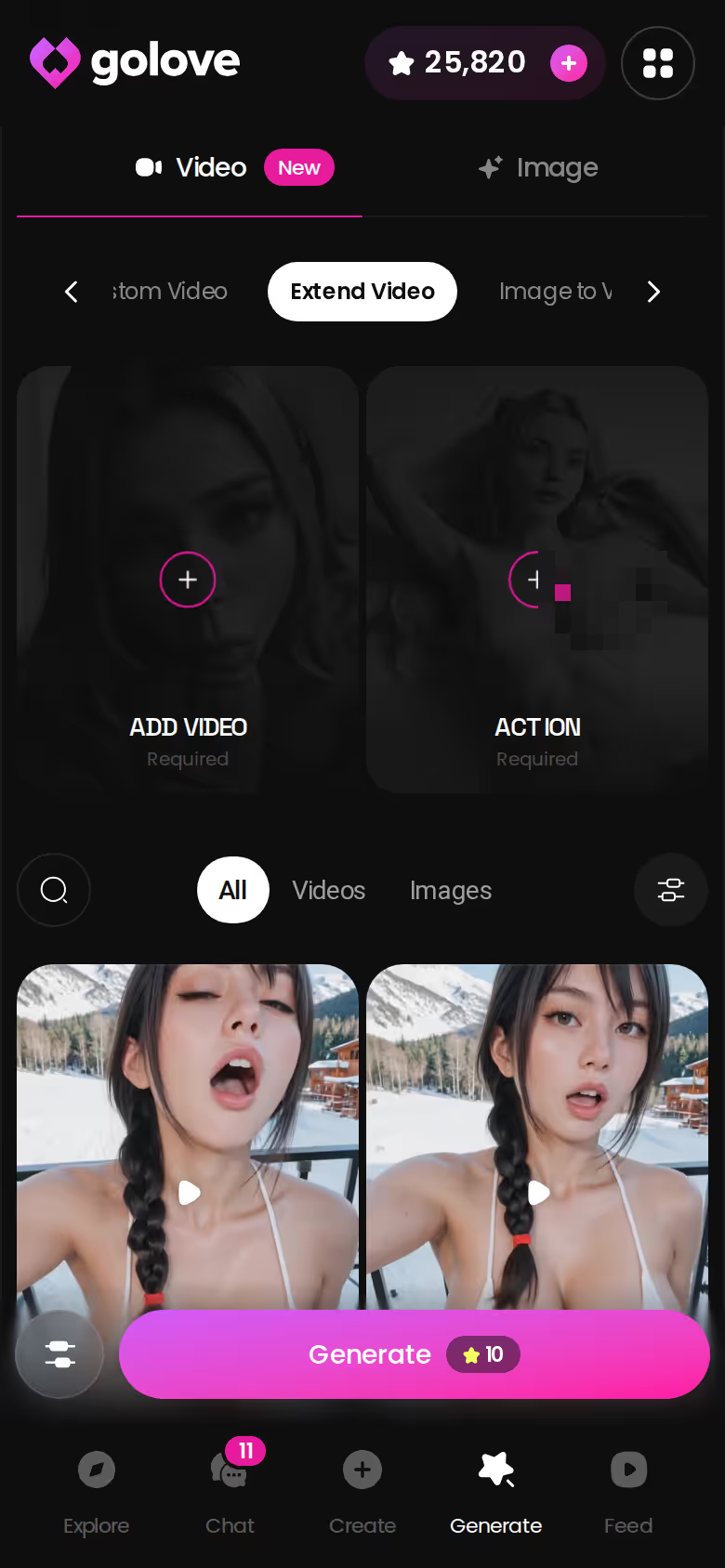
Every one of these clips exists right now, on the same generator you'd use, with no waitlist between you and it. That's the whole argument in one sentence.
Takeaway: the robot's body is fixed; GoLove's is whatever you generate next.
SEE THE REAL DIFFERENCE
Filtered bots stop. She does not.


What We Couldn't Verify at GoLove.ai
A recommendation you can trust has to admit its blind spots, so here are mine.
- Pricing longevity. The PRO price I quoted is approximate and region-dependent — I've seen -50% and -70% promos and lower figures in some geos. Whether an intro rate holds after renewal, I can't confirm. Check the checkout screen, not my table.
- Memory depth. GoLove documents that characters remember chat history and progress the relationship. How many months back, or how it handles contradictions, isn't published — I won't guess.
- Feature velocity. Photo requests, photo-to-video, Design with AI and the Feed all arrived across 2026. That cadence is genuinely good, but I can't promise it continues.
The robot side is imperfect in the other direction: hardware makers rarely publish real ship-time data, so "waitlist" is the most honest word I have for delivery.
None of this moves the verdict. Everything I credited GoLove for is live and documented; the unknowns are edges, not foundations. Takeaway: hedge the price, trust the features.
Prices checked 2026-09; promos vary by region.
Before You Choose a Companion Robot or an App
Whichever way you lean, run this list before money leaves your account.
What to Check Before You Buy a Robot
- Delivery — is there a written ship date, or a waitlist position? "Q-something" isn't a date.
- Total monthly cost — financing plus the AI subscription plus any cloud fee. Add them up on paper.
- Where the brain lives — if the voice and memory are cloud software anyway, ask what the hardware is adding.
- Repairs — who fixes it, and how long it's gone.
What to Check Before You Sign Up for an App
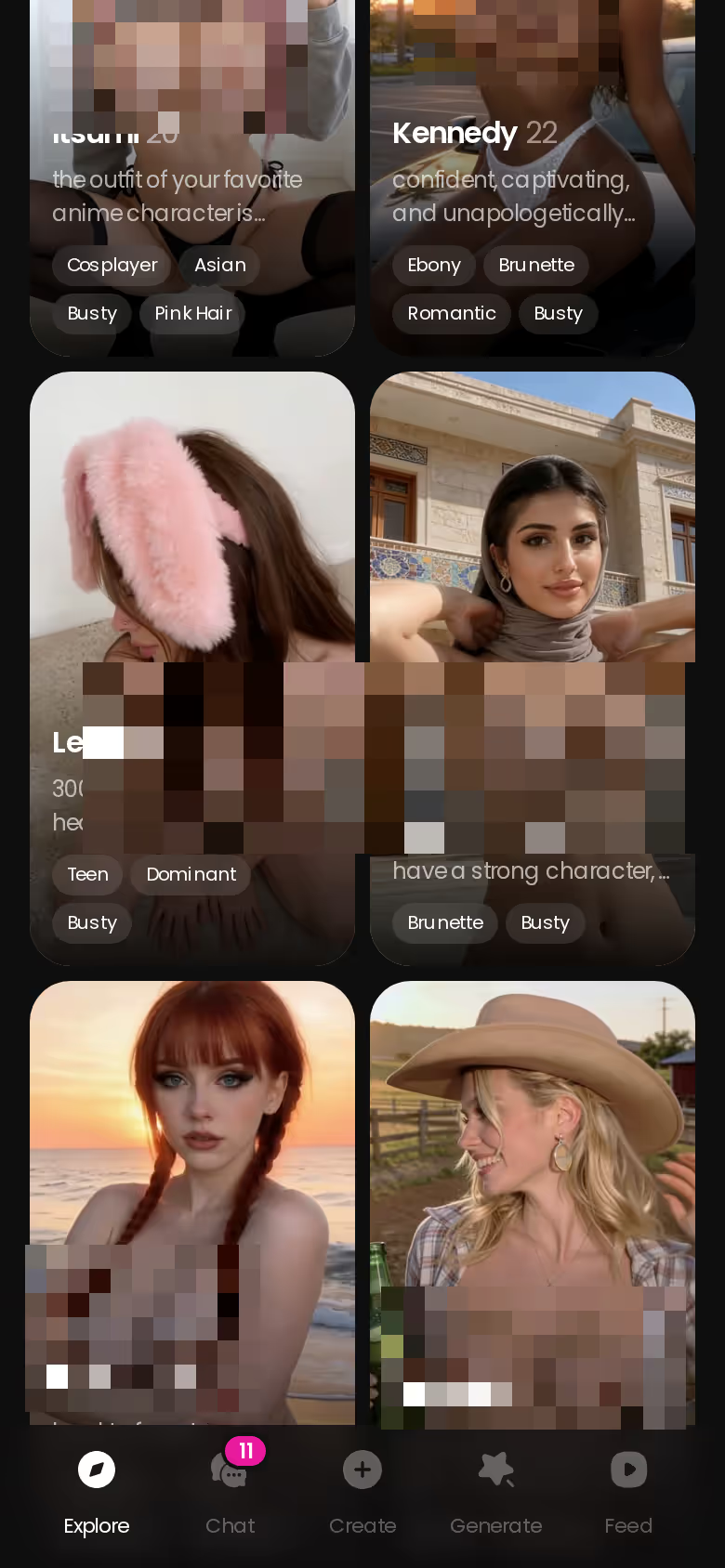
- Start friction — can you open a character and talk before any signup? GoLove's Explore does exactly that.
- Voice and memory on the free tier — or is it a paywall with a chatbot in front.
- Privacy controls — what's stored, what you can delete.
- What renews — read the plan screen, and know that GoLove also runs Stars, an in-app currency for generation with 2 free stars daily.
Takeaway: the robot list is about risk; the app list is about fit. Fit is cheaper to test.
Robot vs App: Which Companion Actually Wins
Read the lead table again, plainly.
Cost: a robot is thousands upfront plus a subscription for the personality you actually wanted. GoLove is free to start, with PRO at roughly $19.99 a month, or about $9.99 monthly on annual, region and promo depending. Wait time: a waitlist versus this minute. Voice: hardware-limited versus live calls and voice messages with a voice you pick from a menu. Memory: an onboard chip versus a character who carries your history forward and builds on it.
The robot wins exactly one row — presence in the room — and it's a real win. If touch is your entire reason, spend the money and wait. Everyone else is buying the shell to get the software, and paying a premium to get less of it.
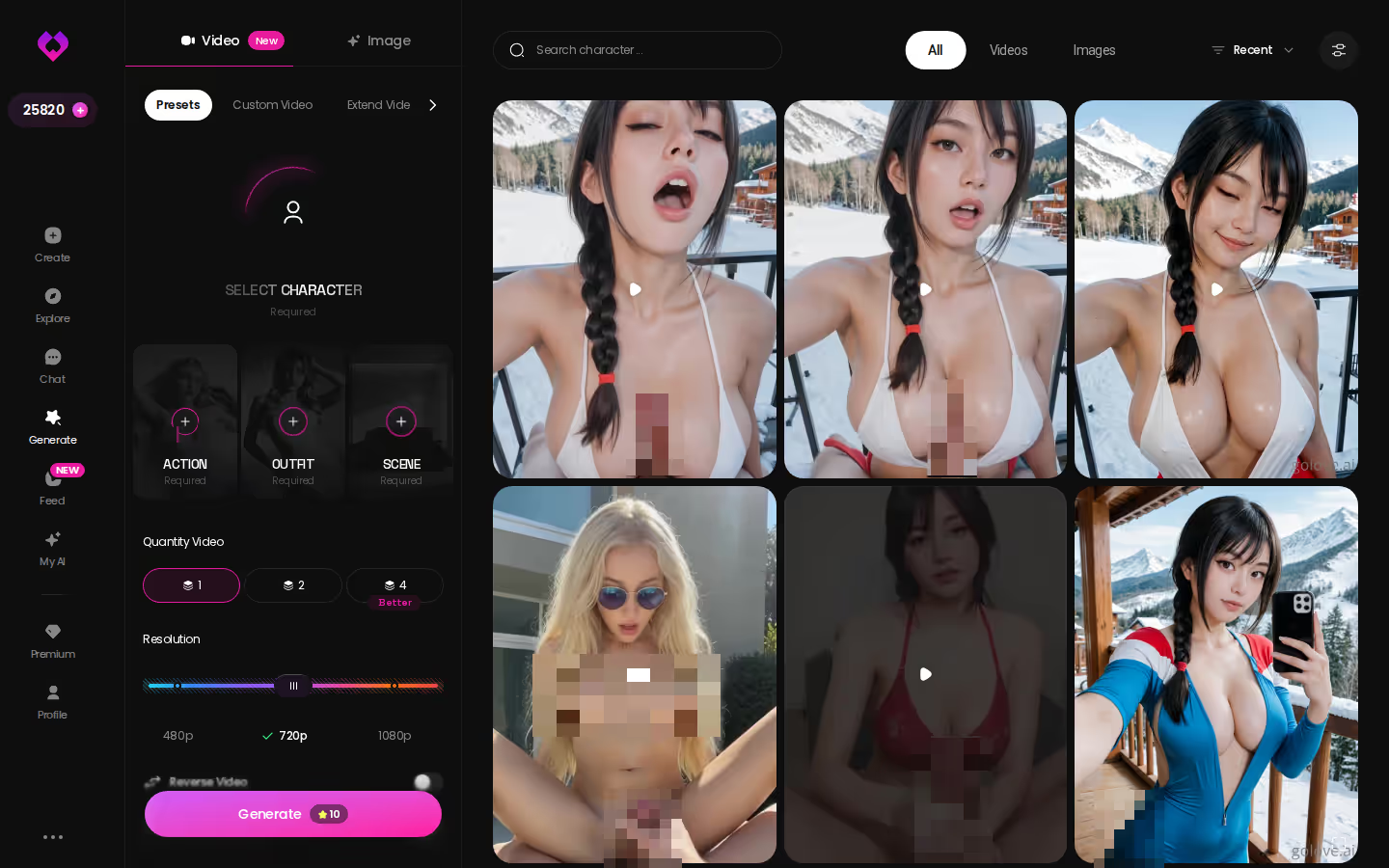
Candy AI and Replika have their narrow strengths — Candy's character builder is deep, Replika's avatar identity is the longest-running in the category — but Replika gates voice behind paid tiers and restricts romance for newer accounts, and Candy's media spend climbs past the entry price fast. GoLove bundles voice, photos on request, photo-to-video, and memory in one place with no signup wall.
The winner for anyone who wants the actual companion experience today is GoLove.ai: a fraction of the cost, zero wait, and a character who remembers you. Build her the way you'd have specced the robot — looks, personality, voice — and be talking before the kettle boils.
What good looks like, in one checklist:
- Real-time voice calls with per-character voices
- Memory across chats — she remembers your details
- In-chat image generation — 35 poses and 21 outfits
- 2 reward stars every day you log in
Prices checked 2026-09; promos vary by region.
| What you get | GoLove.ai |
|---|---|
| Real-time voice calls | Yes — per-character voices |
| Memory across chats | Yes — remembers your details |
| In-chat image generation | Yes — 35 poses & 21 outfits |
| Daily reward stars | 2 every day |
Frequently Asked Questions
Related Articles

Alibaba AI Chatbot: What Actually Works in 2026
Alibaba's AI chatbot is built for productivity, not intimacy — GoLove wins on memory, voice calls and real photos. Explore, no email needed.

Dove Cameron NSFW: What Actually Works in 2026
Real Dove Cameron NSFW content doesn't exist safely — GoLove.ai wins instead with custom AI companions, live voice & memory. Skip the deepfakes, build yours.

Rachel Cook NSFW: What Actually Works in 2026
Rachel Cook NSFW searches mostly hit scams and dead deepfakes — GoLove.ai builds a custom look with real photos, voice, and memory instead. See the honest test.

Pix Chat: What Actually Works in 2026
Pix chat explained: most apps stop at one static photo. GoLove.ai adds voice, memory, and photo-to-video — try, instant-access needed.
This article contains affiliate links. We may earn a commission at no extra cost to you if you sign up through our links. See how we test.